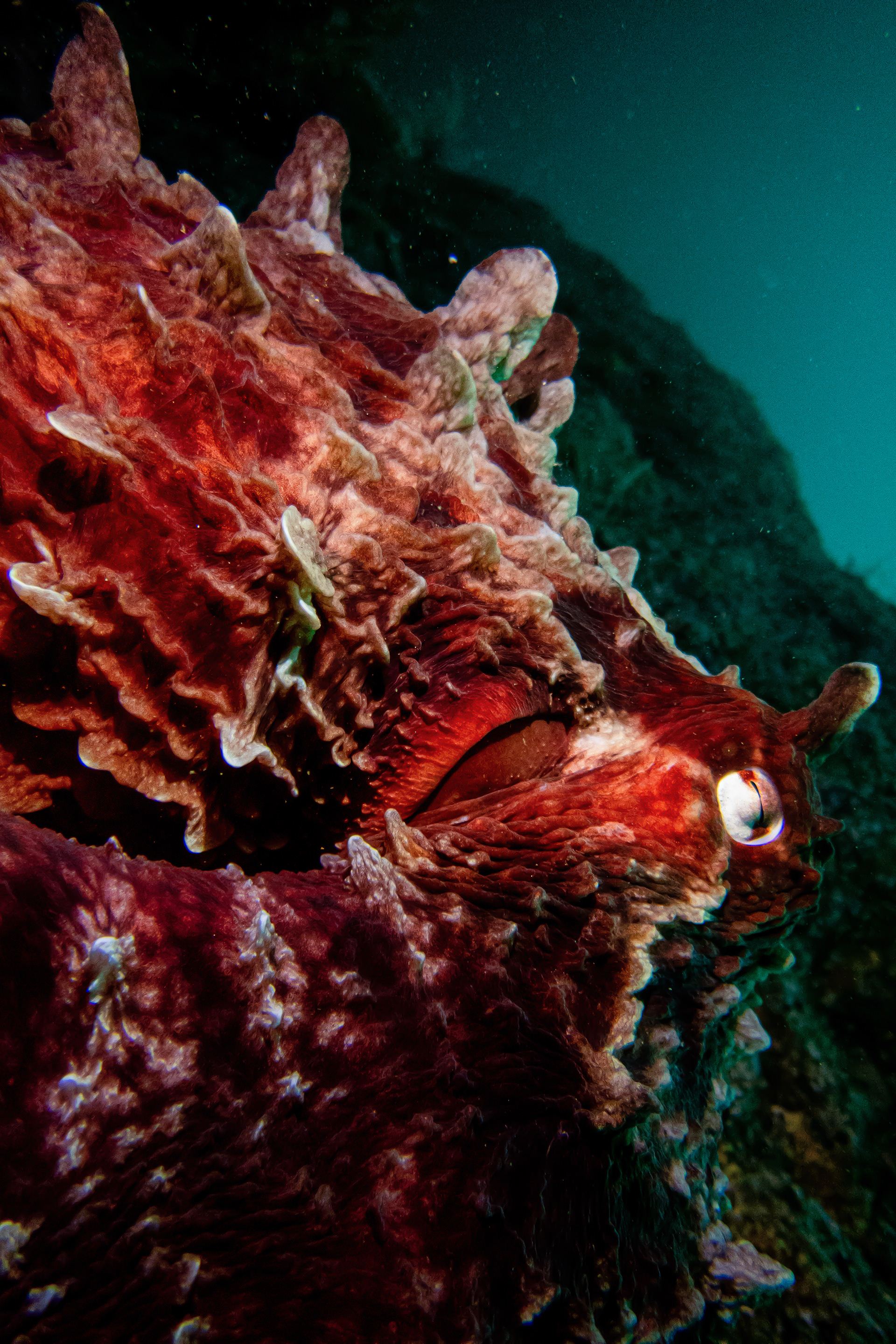
The Giant Pacific Octopus is the largest octopus species on Earth — powerful, intelligent, and deeply present in the cold waters of the North Pacific.
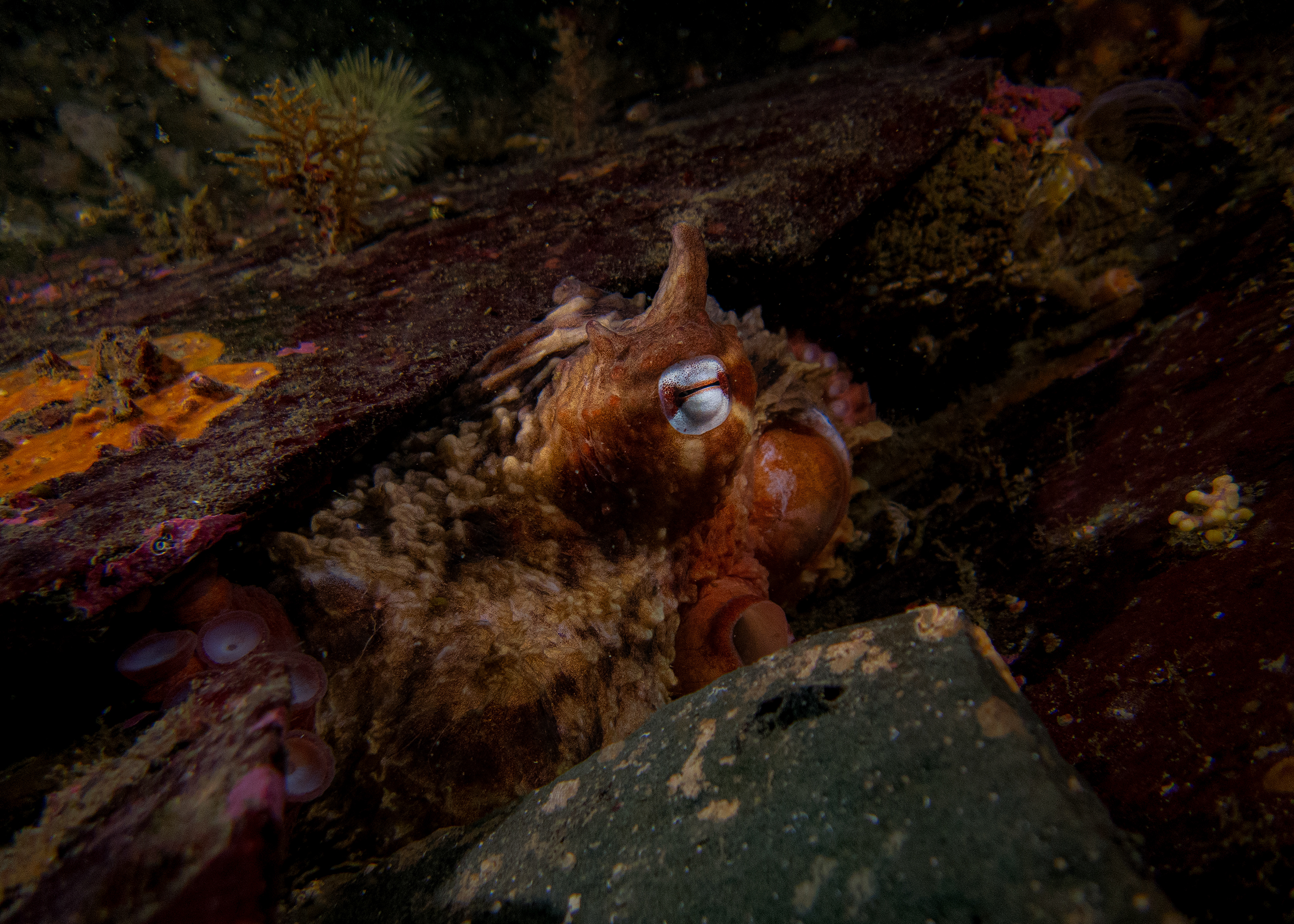
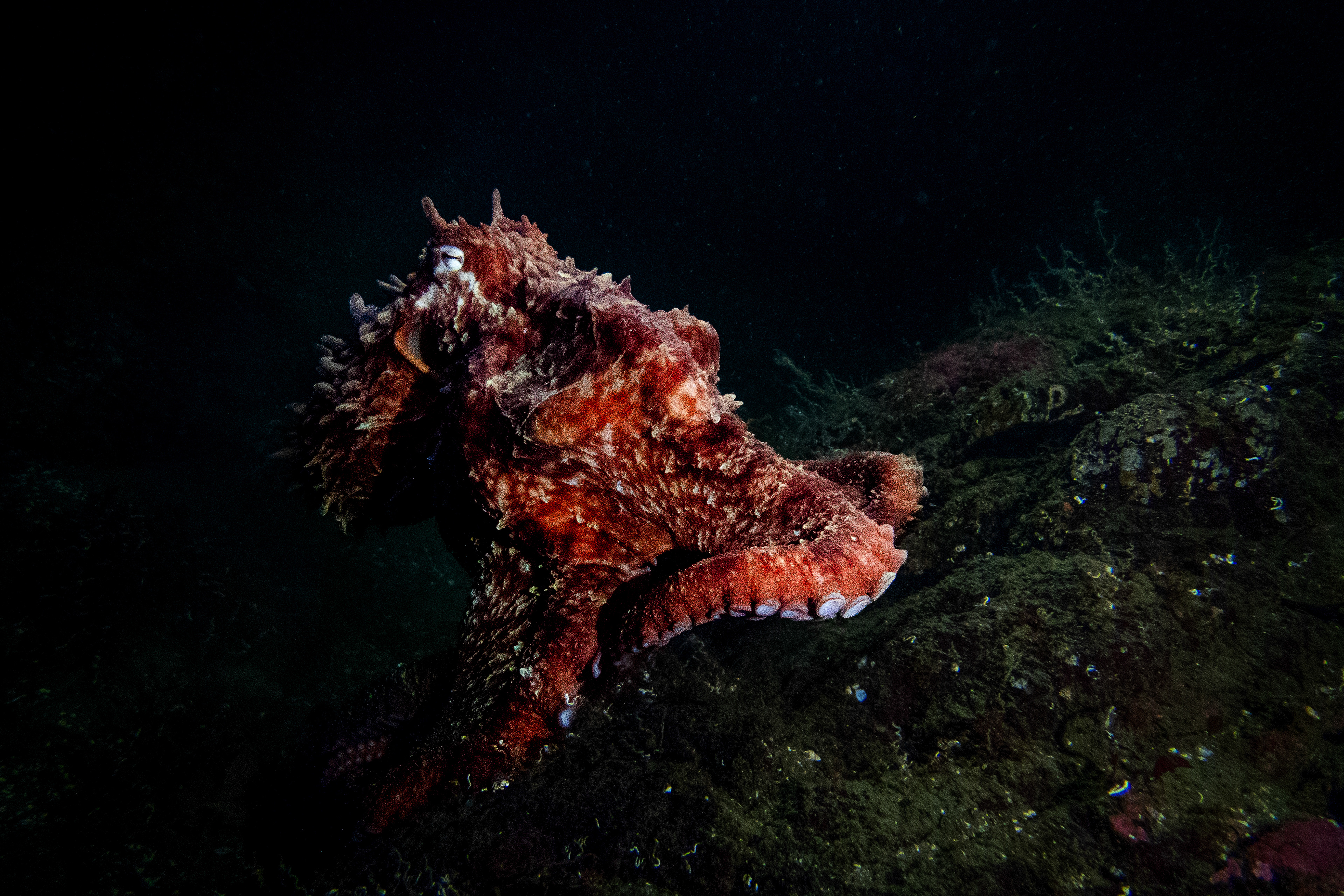
In British Columbia, encounters are rarely accidental. You look for the midden piles first — broken shells scattered outside a den — small evidence of a patient hunter at work. If one is home, you’ll see an eye before anything else. Watching. Measuring.
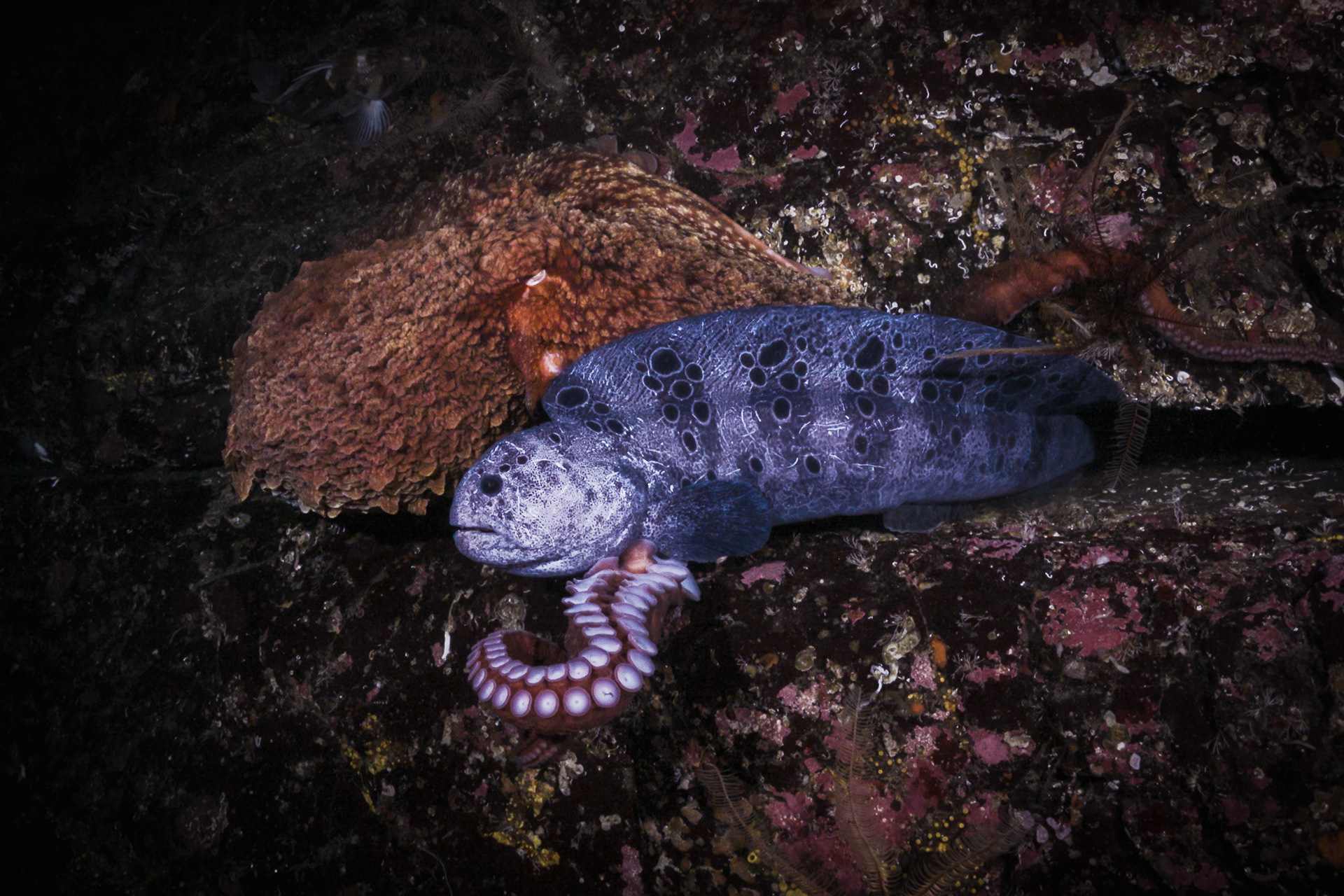
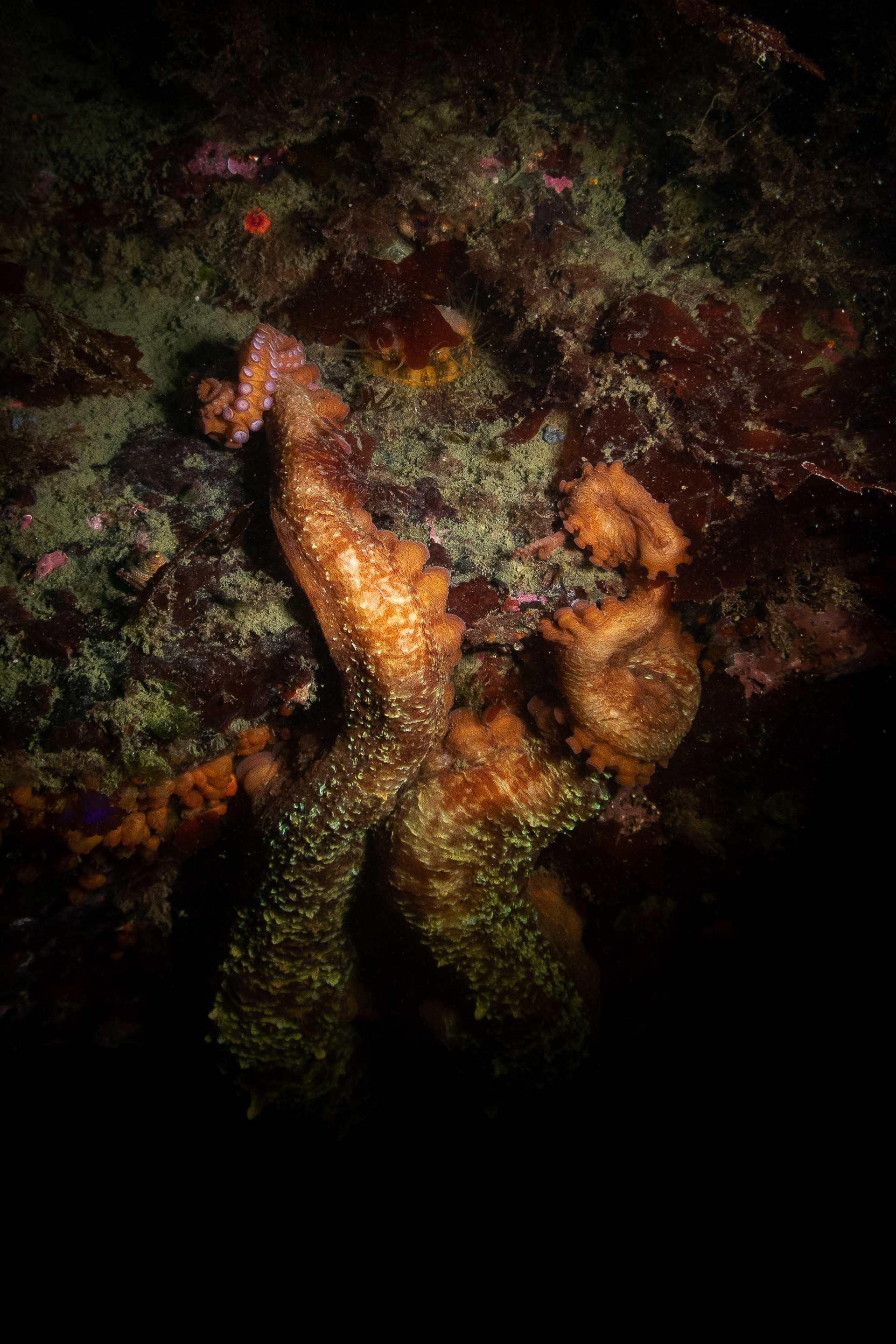
They can stretch wider than a doorway, yet compress themselves into spaces no larger than a fist. Their skin shifts texture and tone in seconds, not for spectacle, but for survival — blending with rock, kelp, shadow. Not disappearing, but choosing how they are seen.
There is weight to meeting one underwater.
They do not startle easily. They assess.
They do not startle easily. They assess.
Some remain tucked into their dens, arms coiled with quiet strength. Others reach out, curious, tasting the current with thousands of sensitive suckers. Every interaction feels deliberate.
Photographing them isn’t about chasing movement. It’s about slowing down. Matching their stillness. Allowing the moment to unfold without forcing it.
In these cold waters, they are both apex predator and patient observer — shaping their small territories, leaving subtle traces of their lives behind.
Each encounter feels earned.
Early Shelter
Not every Giant Pacific Octopus begins life in a rocky den.
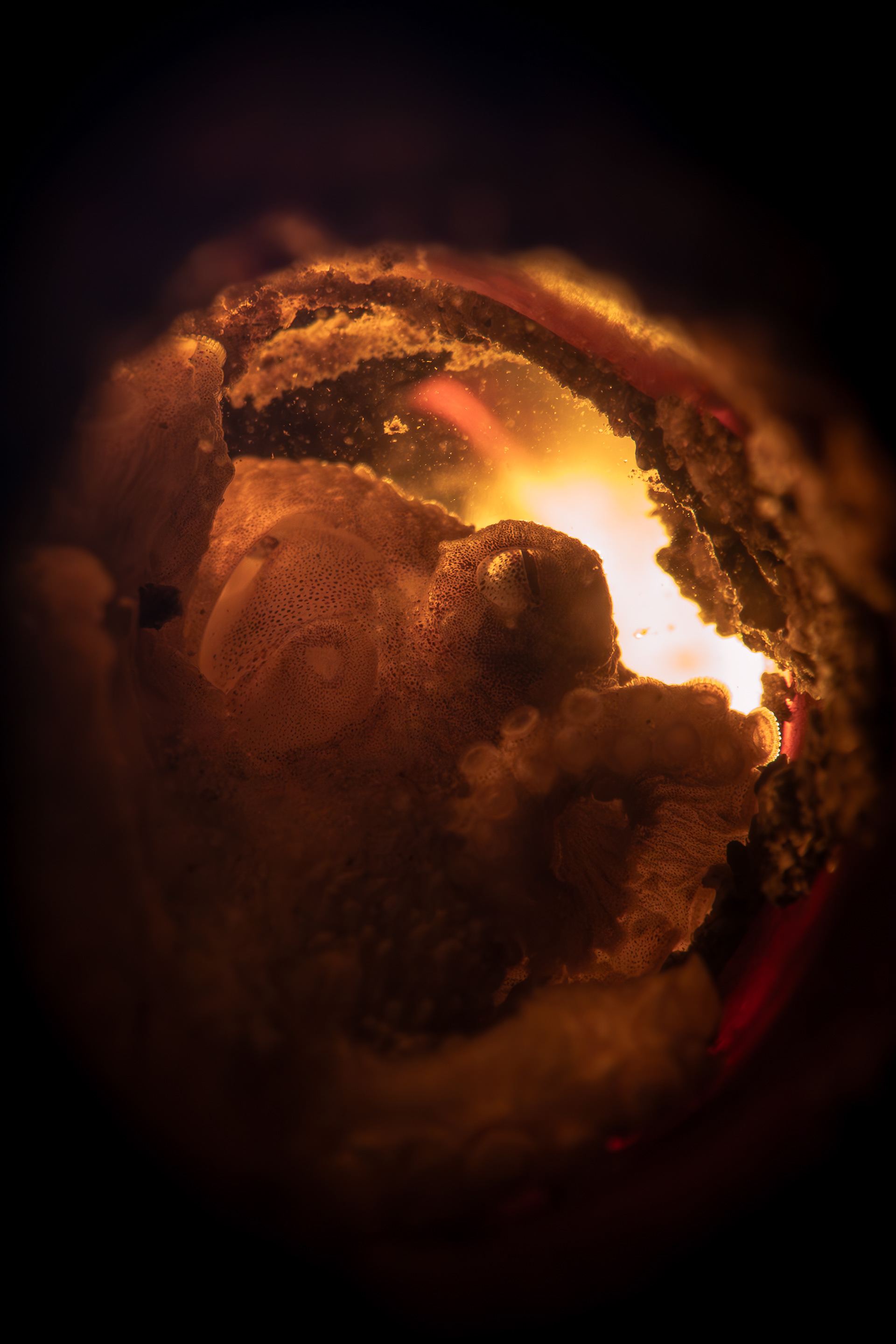
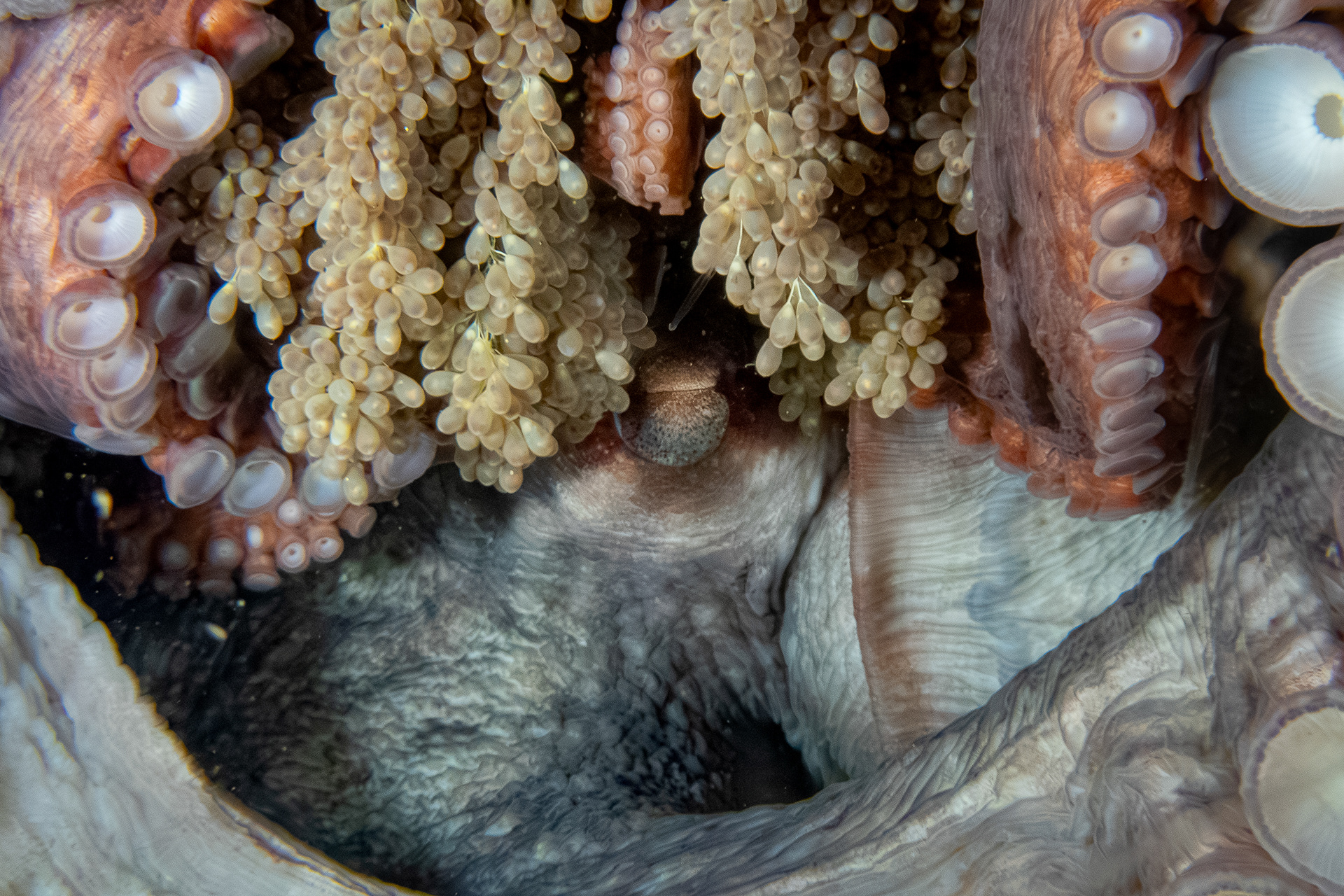
Juveniles settle wherever they can find protection — crevices in reef, abandoned shells, or, increasingly, discarded debris. On this dive, a young octopus had claimed a glass bottle on the seafloor as its refuge.
I removed my lights and lit from behind, allowing the bottle to glow and reveal the eye within.
Even the largest octopus in the North Pacific begins small, cautious, watchful, and dependent on whatever shelter the environment provides.